The field of healthcare has changed forever. Since it is now possible to book a consultation in pajamas and receive an AI-enhanced diagnosis on the other side of the planet, telemedicine applications have ceased to be an optional product and have become a necessity.
And the question you have is: What does it really cost to build a telemedicine app in 2026? You have been asked by an entrepreneur, health care provider, or startup founder; by way of you, you have come to the right place.
By 2030, the global telemedicine market is estimated to exceed $380 billion, with a CAGR of over 18%. The telehealth visit has never been in a better position, as more than 76% of patients now prefer telehealth visits over non-emergency services.
You need to create either a simple MVP to test your hypothesis or a company-scale resource that includes AI diagnostics and IoT device integration. This guide separates every cost element – no spam, no imprecise estimations. Let’s dive in.
Why Telemedicine App Development is a Smart Investment in 2026?
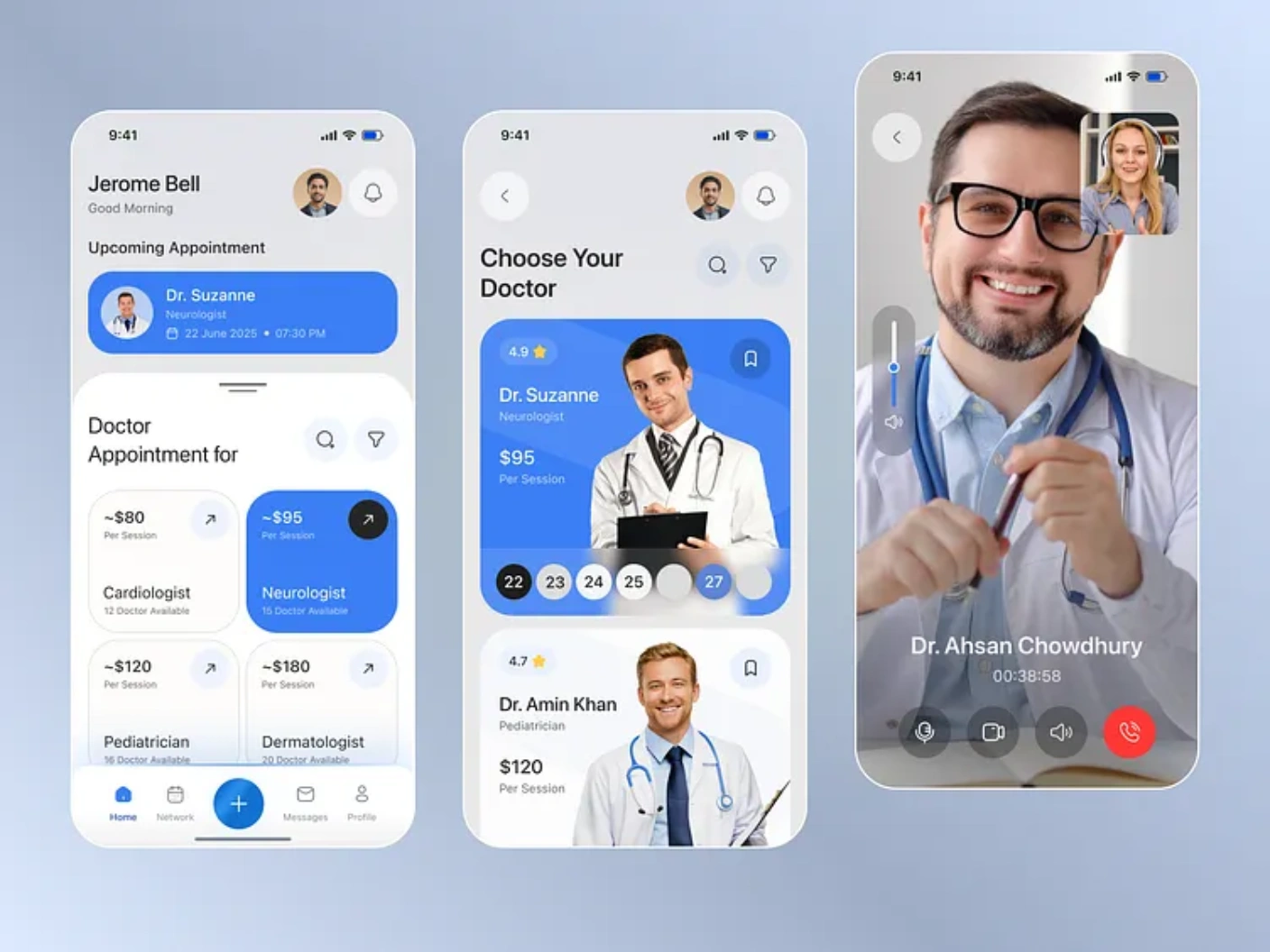
Telemedicine is no longer a choice; it is a given. Patients desire instant, distant care, and suppliers require that delivery models be cost-effective and scalable. In 2026, investing in telemedicine app development means aligning with how modern healthcare actually operates.
To the patients, the benefits are direct and quantifiable. They have 24/7 access to care, particularly in rural or underserved regions where specialists are scarce. Wait times are reduced significantly- most telehealth appointments require less than 15 minutes as compared to hours of face-to-face appointments.
Prices are usually 40-80% cheaper than physical visits. IoT-monitored remote monitoring enables patients to report real-time vitals to physicians, and smart alerts can reduce no-show rates by as much as 67%, thereby enhancing overall participation.
To medical professionals and other medical practitioners, telemedicine eliminates geographical boundaries. Doctors may serve patients at a national or even a global level. EHR integrations, e-prescriptions, and automated scheduling will decrease paperwork by 30%.
Back-to-back virtual consultations increase the number of patients served each day by 20-40%. Clinical insights library AIs can also provide users with valuable insights into symptoms prior to appointments.
The potential is enormous for startups and healthcare businesses. The global telemedicine market is expected to reach more than $380 billion, driving high demand in niches such as mental health, pediatrics, and dermatology.
Subscription models generate recurring revenue, whereas the per-consultation model provides scalable growth. With a focused MVP, you can be in the market within 35 months and therefore can validate in a short period of time.
In short, telemedicine app development in 2026 delivers value to patients, efficiency to providers, and scalable growth to businesse making it one of the smartest digital health investments today.
Key Factors Affecting Telemedicine App Development Cost
We have to discuss the cost factors first before we arrive at the figures, as to why two telemedicine applications can cost USD 30,000 and USD 300,000 respectively. The price of the telemedicine app development is conditioned by a number of related factors:
App Complexity & Feature Set
On one end, there is a simple telehealth application with video calls and booking; on the other, an application with AI diagnostics, multi-specialty routing, IoT device integrations, and multi-language support. Each new feature you include, particularly complex ones, costs you in both development and maintenance time.
Platform Choice (iOS, Android, Web, and All Three)
A single platform is much less expensive to build compared to a telemedicine solution that is cross-platform. Cross-platform development with React Native or Flutter provides an opportunity to achieve near-native performance at 30-40% the cost of developing three codebases.
Development Team Location
This one factor alone can throw your overall project budget by 60% or even more. In the US, a senior developer charges 120-200/hour, in Eastern Europe and South Asia, the same expertise charges 25-60/hour. We will discuss this in detail in the table of the regional cost below.
HIPAA, GDPR, and HITECH Regulatory Compliance
There is no compromise on compliance in healthcare. A strong hipaa compliant app development strategy end-to-end encryption, audit logs, Business Associate Agreements with vendors, and secure data storage architecture. In case you are working with EU patients, there is the GDPR on top. Allocate extra funds to compliance architecture and recurring compliance audits.
How Much Does it Cost to Develop a Telemedicine App in 2026
The cost of telemedicine application development scales directly with the scope and sophistication of your solution. The following shows the distribution of the figures through the top 3 levels of investments:
| App Type | Estimated Cost Range | Timeline | Best For |
| Basic / MVP | $25,000 – $80,000 | 3–5 months | Startups validating an idea; small clinics transitioning to digital-first care |
| Mid-Level / Standard | $60,000 – $150,000 | 5–9 months | Growing telehealth businesses needing multi-specialty or multi-provider support |
| Advanced / Enterprise | $150,000 – $300,000+ | 9–18+ months | Hospital networks, insurers, and national-scale telehealth platforms |
Global Cost by Development Team / Region
Choosing between a telehealth app development company in the USA and India or anywhere in between is one of the most consequential decisions you’ll make. The following is a sober assessment of local rates and feasible project amounts:
| Region | Hourly Rate (Senior Dev) | MVP Total Estimate | Enterprise Total Estimate |
| USA / Canada | $120 – $200/hr | $120,000 – $250,000 | $400,000+ |
| Western Europe | $80 – $140/hr | $90,000 – $180,000 | $300,000+ |
| Eastern Europe (Ukraine, Poland) | $40 – $80/hr | $40,000 – $90,000 | $150,000 – $250,000 |
| South Asia (India, Pakistan) | $20 – $55/hr | $25,000 – $70,000 | $100,000 – $200,000 |
| Southeast Asia (Philippines, Vietnam) | $25 – $60/hr | $30,000 – $80,000 | $120,000 – $220,000 |
| Latin America (Brazil, Argentina) | $35 – $70/hr | $35,000 – $85,000 | $130,000 – $230,000 |
| Pro Tip: Many successful telemedicine startups combine a telemedicine app development company in India or Eastern Europe for core engineering with a small in-house product/strategy team in their home market. This hybrid model routinely cuts total project costs by 40–60% without sacrificing quality, provided you choose a partner with genuine Healthcare IT Services experience and a verifiable HIPAA compliance track record. |
Hidden Costs You Must Budget For
The greatest error beginners make when building an app is to budget the development stage only. Your true telemedicine application development cost includes a wide range of recurring and one-time expenses that many founders discover only after launch, often painfully:
| Hidden Cost Category | Annual / One-Time Cost | Notes |
| Telemedicine App Maintenance Cost | 15–20% of dev cost/year | Bug fixes, OS updates, security patches, feature iterations |
| HIPAA Compliance Audits | $5,000 – $20,000/year | Annual audits, penetration testing, BAA renewals with all vendors |
| Cloud Infrastructure (AWS/GCP/Azure) | $500 – $5,000+/month | Scales with users; HIPAA-eligible cloud tiers cost a premium |
| Video API Fees (Twilio / Agora) | $0.01 – $0.04/min/participant | A core component of your telemedicine API for apps, scales with consultation volume |
| Marketing & User Acquisition | $2,000 – $20,000/month | Digital marketing, B2B outreach, referral programs, and content marketing |
| App Store Fees & Developer Certificates | $99 – $299/year | Apple Developer Program + Google Play Console annual fees |
Telemedicine MVP Cost Specifics
If you are at the startup or early-stage of a company, we highly suggest starting with a Minimum Viable Product (MVP). An MVP approach to telemedicine application development lets you launch fast, gather real user feedback, and iterate before committing $200K+ to a full-featured platform.
A well-scoped telemedicine MVP typically includes user registration and onboarding to ensure secure access for both patients and providers. It also covers appointment scheduling through a basic telehealth appointment app interface, making it easy to book and manage consultations.
Core functionality generally includes HD video consultations powered by WebRTC or Twilio, along with HIPAA-compliant secure messaging for safe communication. In addition, doctor profile management and essential payment processing are integrated to support smooth operations.
If you work with a South Asian or Eastern European telemedicine app development company, you can typically launch this MVP for $25,000–$50,000 within 3-4 months. However, partnering with a US-based App Development Company specializing in healthcare may cost between $80,000 and $130,000 for the same scope and timeline.
Must-Have Features in a Telemedicine App
Here is a comprehensive breakdown of core telemedicine app features, the building blocks of every successful custom telemedicine app development project:
Patient-Side Features
1. Protected Registration and Profiles:
Identity verification, medical history intake, and insurance storage. Critical to any HIPAA-compliant telemedicine application.
2. Telehealth Appointment App:
Real-time availability calendar, smart reminders, and easy rescheduling.
3. HD Video Consultation
WebRTC or Twilio Video and a virtual waiting room, adaptive quality, and optional recording of the session.
4. HIPAA-Compliant Messaging
In-app chat that ensures security in pre/post consultation follow-up, file exchange, and prescription requests.
5. E-Prescriptions
Digital prescription issuance with direct pharmacy network integration via telemedicine API for apps.
6. Telemedicine Payment Gateways
PCI-DSS payments using credit/debit, HSA/FSA, and insurance payments.
Functionality on the Doctor / Provider side
Strong telemedicine apps for doctors require a purpose-built provider experience separate from the patient interface:
1. Doctor Dashboard
Credentials, specialization, availability, and consultation cost are controlled via a role-specific administration perspective.
2. EHR Integration
Bidirectional patient data sync with Epic, Cerner, or Athenahealth via HL7 FHIR APIs is a cornerstone of serious telemedicine application software development.
3. Digital Prescription Writing
DEA-compliant e-prescriptions including drug interaction checking.
4. Analytics & Reporting
One dashboard to show revenue, consultation volume, patient satisfaction, and no-shows.
5. Multi-Provider Support
Granular role-based access control, manage multiple physicians and care teams.
High-tech Features Driving Up the Telemedicine App Price
Have a desire to create something that really stands out in a market where the competition is very tough? These advanced capabilities add meaningfully to the cost of telemedicine app development, but they also dramatically increase your platform’s value proposition and long-term defensibility:
-
AI Symptom Checkers / Intelligent Triage
Intelligent triage and symptom checkers are machine learning models trained on clinical data that assist patients in self-evaluation prior to booking an appointment and automatically direct them to a specialist best suited to help.
This is one of the most impactful applications of AI in healthcare today, adding $20,000–$60,000+ to your project, depending on model complexity and the availability of the clinical dataset.
-
IoT Remote Patient Monitoring
Integration with wearable devices (Apple Watch, Fitbit, continuous glucose monitors, ECG patches) to feed real-time biometric data into the platform via your telemedicine API for apps. Appendix 15-40k and more, according to the scope of devices ecosystem you have to support.
-
AI in Telemedicine Apps Diagnostic Imaging
Dermatology image analysis by computer vision, retina scans, or X-ray analysis. Needs an infrastructure investment and clinical testing before implementation. The cost of meaningful AI diagnostic features is $50,000 to $150,000 or more.
Explore the broader landscape of AI in healthcare for context on where this technology is heading.
-
Real-Time Patient Monitoring Dashboards
ICU step-down or chronic disease management applications. Real-time monitoring with adjustable alert limits will introduce an additional level of meaningful complexity and cost to the backend infrastructure.
-
Multi-Language & Localization Support
Targeting a wide range of patients is an effective addition that costs an extra $ 5,000 to $20,000 to install initial translation infrastructure and ongoing content management processes.
-
Voice and NLP Interfaces
Voice booking and symptom entry via natural language processing can enhance your project by adding 10-25,000 dollars in cost, but significantly improve access for older patients.
-
Remote Procedures AR/VR & Clinical Training
Emerging applications in medical training, surgery guidance, and clinical simulation. Very specialized, cost-specific to projects.
How to Develop a Telemedicine App: Step-by-Step
Here is the full telemedicine app development process with a realistic telemedicine app development timeline:
| Phase | Key Activities | Duration |
| 1. Discovery & Planning | Requirements, compliance scoping, roadmap, Healthcare IT Consulting Services | 2–4 weeks |
| 2. UI/UX Design | Wireframes, prototypes, WCAG-accessible design system | 3–5 weeks |
| 3. MVP Development | Core features, API integrations, agile sprints | 8–16 weeks |
| 4. Full Development | Advanced features, AI/IoT, admin & reporting tools | 8–14 weeks |
| 5. Testing & QA | Functional, performance, security, HIPAA compliance testing | 2–4 weeks |
| 6. Launch & Maintenance | Deployment, monitoring, updates, feature roadmap | Ongoing |
Phase 1: Discovery
Determine users (patients vs. providers), compliance needs, and feature priorities. Engaging healthcare IT consulting services here saves six figures in downstream mistakes.
Phase 2: Design
Invest in exceptional telemedicine app design with WCAG 2.1 AA accessibility built in from the first sprint, not retrofitted later.
Phase 3: MVP
Use React Native or Flutter for cross-platform telemedicine mobile app development, 30–40% faster to market than separate native builds.
Phase 4: Full Development
Scale the platform with advanced features, including AI-driven diagnostics, IoT device integrations, comprehensive admin dashboards, and analytics and reporting tools, to support long-term growth and operational efficiency.
Phase 5: QA
QA should involve security penetration testing, HIPAA validation, video latency testing, and real-clinician UAT.
Phase 6: Launch & Maintenance
Deploy the solution to production with secure cloud infrastructure, continuous monitoring, performance optimization, regular compliance updates, and an evolving feature roadmap for sustained innovation.
Telehealth App Development Tech Stack
Choosing the right telehealth app development tech stack is a decision that shapes your platform’s performance, security, regulatory compliance, and long-term maintainability.
Here is what experienced telemedicine app developers recommend for 2026: a battle-tested stack that balances speed, scalability, and healthcare-grade security:
| Layer | Technologies | Purpose |
| Frontend / Mobile | React Native, Flutter, Swift, Kotlin | Cross-platform or native apps |
| Frontend / Web | React.js, Next.js, Vue.js | Web portals for patients, providers, admins |
| Backend / API | Node.js, Python (Django/FastAPI) | Business logic, APIs, telemedicine API for apps |
| Video Conferencing | WebRTC, Twilio Video, Agora | HIPAA-compliant real-time consultations |
| Database | PostgreSQL, MongoDB, Redis | Patient records, sessions, caching |
| Cloud | AWS (HIPAA), Google Cloud, Azure | HIPAA-compliant healthcare web application hosting |
| Authentication | Auth0, OAuth 2.0, JWT, MFA | Secure login and role-based access control |
| EHR Integration | HL7 FHIR, Epic FHIR, Cerner APIs | Bidirectional patient data exchange |
| Payments | Stripe, Braintree, Square | Telemedicine payment gateways |
| AI / ML | TensorFlow, PyTorch, OpenAI API | Symptom checkers, NLP, AI in healthcare diagnostics |
| IoT | AWS IoT Core, Apple HealthKit, Google Fit | Wearable device data for remote monitoring |
Monetization Strategies of your Telemedicine App
How will your telehealth platform make sustainable revenue? There are a number of established telemedicine app monetization models that you have, and the most robust models intelligently blend two or three models to have a diversified income:
1. Subscription Model
Patients can pay a monthly or annual subscription rate to get unlimited or bundled consultations. Best suited for chronic condition management and corporate wellness. Provides consistency in recurring, investor-friendly revenue that scales with your user base.
2. Per-Consultation Fees
A model based on the number of transactions in which patients pay per appointment, and the platform earns a commission (usually 15-30 percent). The barrier to entry is low so that anyone can be a user, it is intuitively simple, and scales due to the volume of engagement.
3. Freemium Model
The basic functionalities are free; the advanced features (priority booking, expert access, AI-generated health reports, longer session times) are available via paid upgrades. Superb plan to acquire users very fast and become viral.
4. B2B / Enterprise Licensing
White-label your custom telemedicine app development solution for hospitals, insurance companies, or self-insured employers offering telehealth as a workforce benefit. Expensive and high-retention contracts with high LTV.
5. Pharmaceutical & Lab Partnerships
Revenue-sharing arrangements with pharmacy partners for e-prescription fulfillment, or with diagnostic labs for integrated test ordering and result delivery via your telemedicine API for apps.
6. Anonymized Population Health Data
Aggregate, anonymized population health information is highly valuable to insurers and our governmental health agencies, but only when there are effective, auditable patient consent frameworks and clear data governance policies in place.
Challenges & Best Practices in Telemedicine App Development
Telemedicine app development involves complex compliance, security, scalability, and adoption challenges. Resolving these early will guarantee that the platform is secure, compliant, high-performing, and developed to support sustainable growth.
1. Regulatory Compliance Complexity
HIPAA, GDPR, HITECH, state telehealth licensing regulations, and cross-border prescribing regulations may be a maze in themselves, and the sanctions in case of failure are harsh.
Best practice: Engage a healthcare compliance specialist and leverage Healthcare IT Consulting Services during the Discovery phase. Compliance is cheaper to build into your telemedicine platform during sprint one than to add once the platform is up and running.
2. Security at Every Layer
Healthcare information is 50x more useful on the dark web than financial information. Your HIPAA-compliant telemedicine apps must implement end-to-end encryption in transit and at rest, zero-trust network architecture, regular third-party penetration testing, and rigorous role-based access controls.
Best practice: Use HIPAA-eligible cloud services from day one and architect your entire backend as a HIPAA-compliant healthcare web application, not as an afterthought bolted on before launch.
3. Scalability & Performance Under Pressure
The presence of a viral moment, such as a flu outbreak or a public health crisis, a large employer implementing your platform on 10,000 employees overnight, etc., can bring a system with under-architecture to its knees at the worst possible time.
Best practice: Build microservices and horizontally scale to the cloud. Make sure to use video infrastructure such as Twilio or Agora, which scales automatically as the number of concurrent sessions increases.
4. Outsourcing Telemedicine App Development Smartly
Outsourcing to a telemedicine app development company in India or Eastern Europe offers significant cost advantages, but requires diligent partner selection.
Best practices: Check for HIPAA BAA, audit the portfolio of healthcare products, employ milestone-based contracts, source code escrow, and complete the transfer of IP. Choose reputable healthcare software development companies, not generic IT staffing vendors.
5. Physician Engagement & Change Management
The most technically brilliant platform will not work when the clinicians do not embrace it. Invest in structured provider onboarding, in-app guided tours, responsive technical support, and champion programs for early-adoption physicians. Their recommendations and word of mouth are your best patient recruiting source- and absolutely free.
How to Hire Telemedicine App Developers
Knowing how to develop a telemedicine app conceptually is one thing. Another one is knowing how to locate and screen the right team. Here’s what to look for when you hire telemedicine app developers:
- Healthcare-Specific Portfolio: Compliant, live healthcare products – not simply UI mockups.
- HIPAA Compliance Knowledge: Is he or she able to sign a BAA? Are they familiar with the name of HIPAA-eligible infrastructure? When responses are not clear-cut, leave.
- Full-Stack Telemedicine App Development Services: Strategy, UX, frontend, backend, API integration, QA, compliance, all under one roof.
- Transparent Agile Delivery: Sprint demos, milestone reporting, and open budget management are essentials.
- Established API Integration Track Record: Enquire about Twilio, EHR FHIR API,s and telemedicine payment gateways experience in particular.
- Flexible Engagement Models: Fixed-price MVP, dedicated team, or time-and-materials retainer. The right telemedicine app development company matches your stage.
Conclusion
It is better to enter the telemedicine space for the first time. The market is growing, patient adoption is at an all-time high, regulatory frameworks are maturing, and the technology stack for telemedicine application development is more powerful and accessible than ever.
Regardless of whether you are planning to build an MVP with a $30,000 or an enterprise platform with a $300,000 price tag, the crucial initial step is always the same: create a clear strategy, make compliance the priority on the first day, and collaborate with a team of developers that truly understands healthcare, not only code.
The telemedicine app development cost is an investment one that, executed correctly, can generate returns many times over in a market growing at 18%+ annually.
Nail down the key features of your telehealth app early, choose the right telehealth app development tech stack, follow a disciplined telemedicine app development process, and start lean with an MVP that proves your value before you scale.
It is the way that the most successful telehealth platforms in the world got to their current status- and it is exactly how yours will as well.

Partner with Experts
Frequently Asked Questions
What factors affect the cost of developing a telemedicine app?


The price is based on the app’s complexity, the platform used, the team’s location, and regulatory compliance. The features are more like AI or IoT integrations, or support for more languages, which make it more expensive.
What is the average cost to build a telemedicine app in 2026?
The price varies widely depending on the complexity of an app. Simple applications or MVPs are priced between $25,000 and $80,000; middle-level applications cost between $60,000 and $150,000; and advanced business applications cost $150,000 or more.
Why should I start with a Minimum Viable Product (MVP)?
Using an MVP enables you to test your idea quickly and at a reduced cost. It is centered on the most important traits, allowing you to explore the market, exchange the goals with the users, and repeat before investing in a full-fledged platform. MVPs typically cost between $25,000 – $50,000.
What are the key features required in a telemedicine app?
The main features include secure patient registration, video visits, HIPAA-compliant messaging, e-prescriptions, and payment gateways. The necessary features on the provider side are a doctor dashboard, EHR integration, and electronic prescriptions to facilitate the processes.
How long does it take to develop a telemedicine app?
The development schedule depends on the app’s complexity. MVPs will be finished in 3-5 months, an average app in 5-9 months, and advanced enterprise apps may need 9-18 and on to be finished.
What is the ideal tech stack for telemedicine app development?
In 2026, the technology stack of telemedicine apps would be based on React Native or Flutter (cross-platform mobile applications), Node.js or Python (server), WebRTC or Twilio (video conferencing), and a HIPAA-compliant cloud provider such as AWS or Google Cloud.