


Imagine it’s 3:00 AM, and a parent wakes up to their toddler crying from a sudden rash. Instead of spiraling into a ‘Google-search panic mode’ or waiting 7 hours for a clinic to open, they open their healthcare provider’s app, snap a quick photo, and type a simple question into the chatbot: “What kind of rash is this?”
Within seconds, the chatbot analyzes the image and asks a few follow-up questions to understand what’s changed recently. Moments later, the bot explains it’s a non-emergency reaction to a new laundry detergent.
Not only that, but it also recommends an over-the-counter cream and schedules a follow-up telehealth check for the next afternoon. This is where chatbots in healthcare are making a real impact. This is just one example. Later in the blog, we will cover multiple use cases.
AI-powered healthcare chatbots are transforming how patients interact with hospitals, clinics, insurers, and digital health platforms. The rise of healthcare automation is about delivering timely, consistent, and personalized experiences through ongoing digital healthcare transformation without compromising quality or compliance.
In this guide, we will explore how healthcare chatbots are streamlining administrative tasks, the most impactful use cases in modern clinics, and why these virtual assistants are the key to a more empathetic healthcare ecosystem.
What are Chatbots in Healthcare?
Chatbots in healthcare are AI-powered digital assistants designed to interact with patients, caregivers, and healthcare professionals through natural, human-like conversations.
Unlike traditional chatbots that follow simple, rule-based scripts, a chatbot in medical field uses advanced technologies such as natural language processing and machine learning to understand medical queries, interpret context, and deliver more accurate, personalized responses.
- Healthcare chatbots are built to handle sensitive health-related interactions, support clinical workflows, and comply with strict data privacy regulations.
- Many function as a virtual medical assistant, helping users check symptoms, schedule appointments, receive medication reminders, or access health information anytime.
These chatbots are commonly deployed across websites, mobile apps, and popular messaging platforms, making conversational AI in healthcare accessible wherever patients already are.
Overview of the Healthcare Chatbots Market
The global healthcare chatbot market was worth USD 1,202.1 million in 2024 and is projected to reach USD 4,355.6 million by 2030, with a CAGR of 24%. This growth is driven by the need for scalable patient communication and operational efficiency.
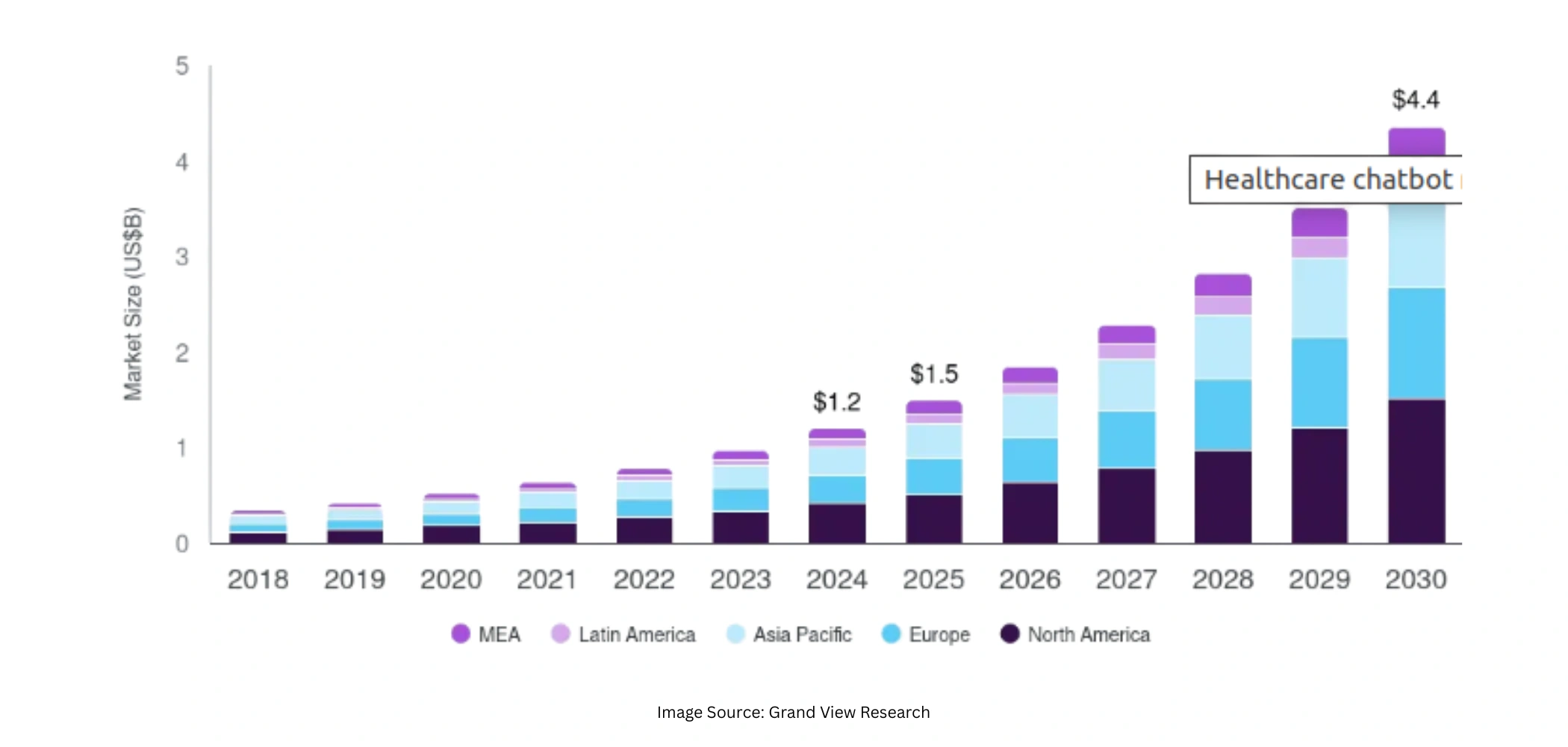
- Healthcare has emerged as a top adopter of chatbot technology.
- Growing patient volumes, complex care journeys, and rising administrative workloads are forcing providers to rethink how care is delivered.
- Chatbots in healthcare industry help automate routine interactions, improve access to care, and enable continuous engagement.
- Increased AI investments and sustained digital health funding have enabled organizations and healthcare software development companies to build more secure, scalable, and intelligent healthcare chatbot solutions as part of long-term strategies.
Trends Driving Market Growth
The software segment, which covers chatbot design and development, accounted for 64% of the healthcare chatbot market share in 2024. Several other factors that are driving this accelerated growth include:
- The surge in telehealth and remote care has created demand for always-on digital support.
- Global shortages of healthcare professionals are pushing organizations toward intelligent healthcare automation to reduce burnout and administrative overload.
- Patients also expect instant, digital-first interactions, similar to other industries.
- Advancements in NLP and generative AI are making chatbots more conversational, accurate, and capable of handling complex healthcare queries.
Adoption of Chatbots in the Healthcare Industry
Chatbot adoption in healthcare is projected to grow by 33.72% between 2024 and 2028, driven by AI technology and improved patient experiences. During public health emergencies, chatbots for healthcare proved their value by delivering real-time updates, symptom screening, and care guidance at scale.
Global Healthcare Chatbots Market Trends and Insights:
- Rapid growth in messaging app usage
- Major advancements in LLM development
- Pressure to reduce 24/7 customer support costs
- Focus on self-service in digital customer experience
- Convergence of voice-first and multimodal chatbots
Types of Chatbots in Healthcare
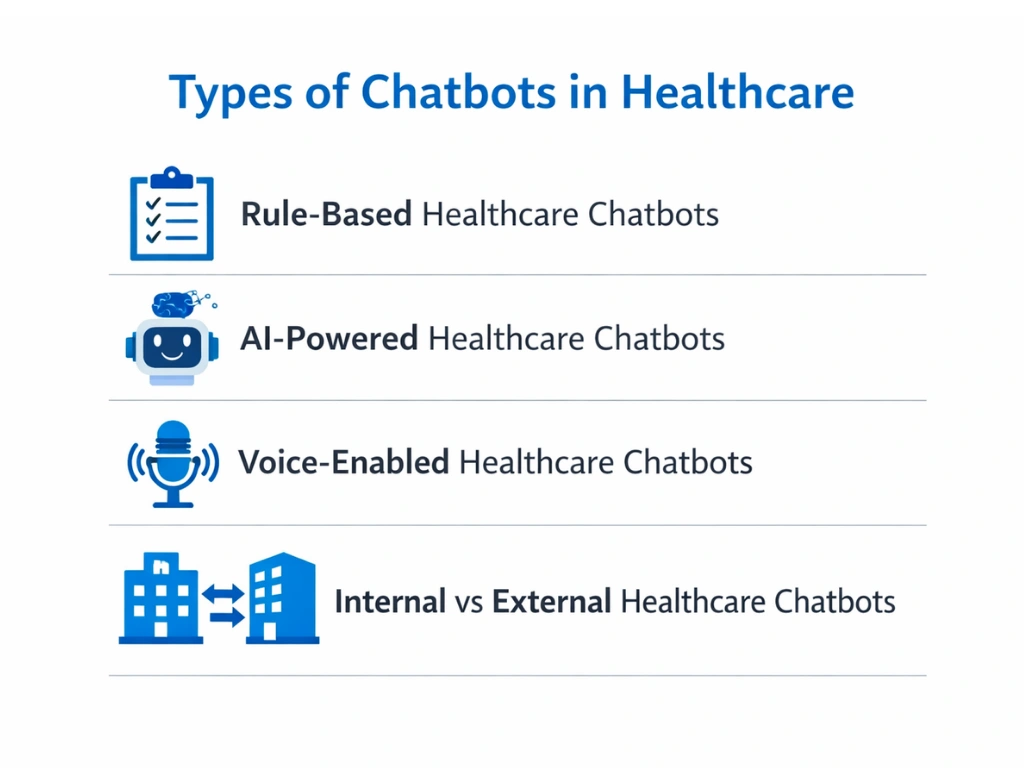
There are several types of healthcare chatbots, each built to support different aspects of patient care and healthcare operations. The right chatbot depends on how complex the interaction needs to be, who will use it, and whether the goal is simple automation or intelligent, context-aware support.
-
Rule-Based Healthcare Chatbots
These chatbots work on predefined scripts and decision trees. They guide users through fixed options and deliver consistent responses to common queries.
A typical example is a hospital website chatbot that helps patients book appointments, check visiting hours, or locate departments. These chatbots are reliable for repetitive, structured tasks but lack the flexibility to handle complex or open-ended questions.
-
AI-Powered Healthcare Chatbots
AI healthcare chatbots use natural language processing and machine learning to understand user intent and context. For instance, a symptom-checking chatbot can ask follow-up questions, analyze responses, and suggest whether a patient should schedule a consultation or seek urgent care.
These medical chatbots offer more personalized, adaptive interactions and improve over time as they learn from data.
-
Voice-Enabled Healthcare Chatbots
These chatbots allow users to interact through speech, making healthcare services more accessible.
An example includes a voice assistant that sends medication reminders or enables appointment booking over the phone, particularly benefiting elderly or visually impaired patients.
-
Internal vs External Healthcare Chatbots
Internal chatbots support clinicians and staff with workflow automation and data access, while external chatbots function as intelligent virtual assistants.
These chatbots enable automated healthcare communication across websites, mobile apps, and messaging platforms.
AI-Powered Chatbot Technology in Healthcare
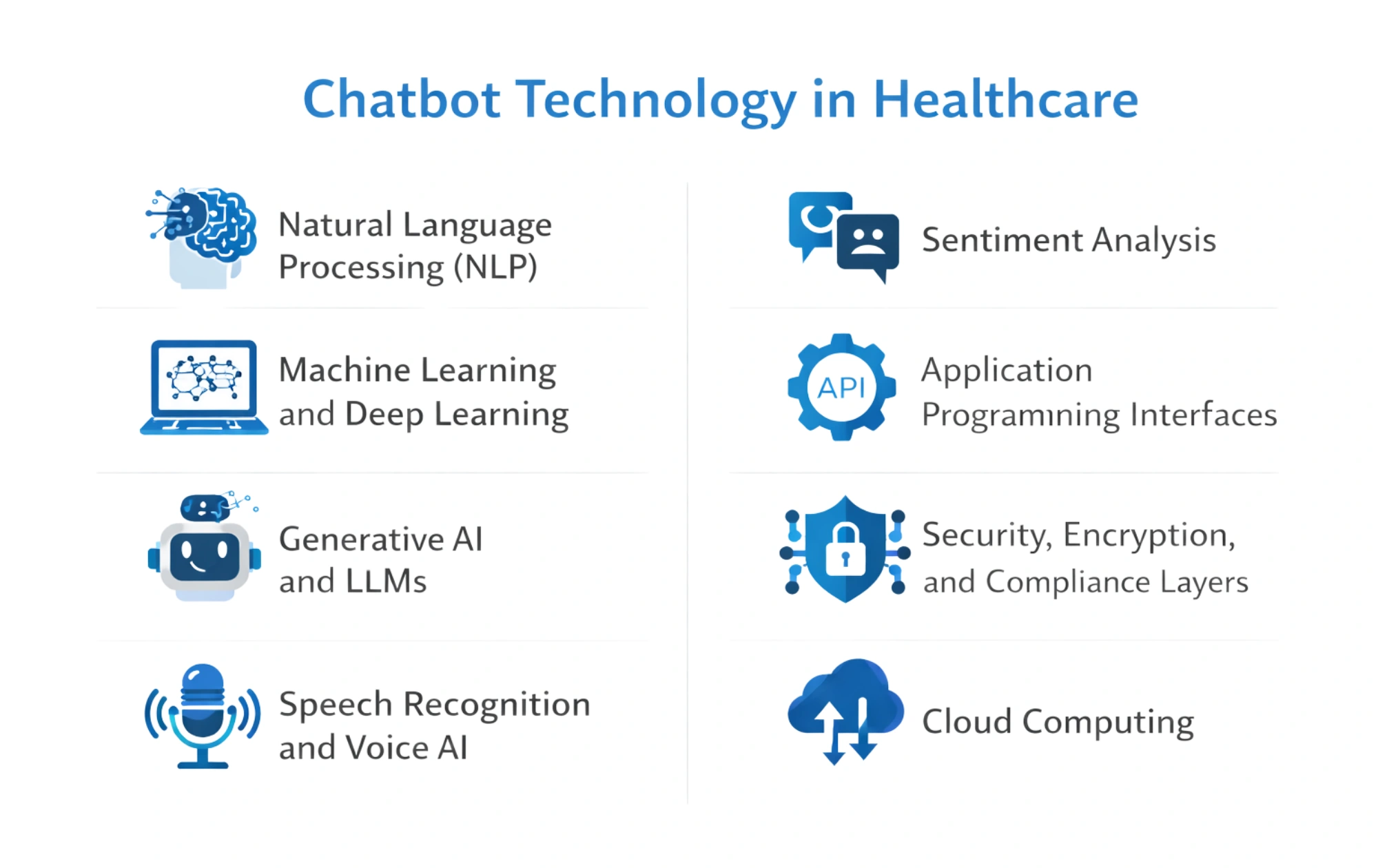
Modern healthcare chatbots rely on a robust, interconnected AI technology stack to understand, process, and respond to complex medical interactions in real time. This evolution reflects the broader progress of AI in healthcare, where intelligent systems are reshaping patient engagement and operational efficiency.
-
Natural Language Processing (NLP)
NLP allows chatbots to interpret patient queries written in everyday language. It helps identify intent, extract medical entities, and understand context, even when questions are incomplete or unstructured. This capability is essential for meaningful patient interactions.
-
Machine Learning and Deep Learning
Machine learning development models enable chatbots to learn from historical interactions and improve accuracy over time. Deep learning further enhances pattern recognition, enabling healthcare chatbot solutions to make more accurate recommendations and predictions.
-
Generative AI and Large Language Models
Generative AI and large language models allow chatbots in healthcare to produce dynamic, context-aware responses. The most common uses of LLMs in healthcare are patient question answering (21%), medical chatbots (20%), and information extraction and data abstraction (19%). When combined with AI agent development solutions, chatbots can autonomously manage workflows, including follow-ups and care coordination.
-
Speech Recognition and Voice AI
Voice AI enables hands-free interaction, allowing patients to speak naturally to chatbots. This improves accessibility for elderly users and supports voice-based healthcare services. About 81% of consumers have used a chatbot or AI-powered voice assistant for healthcare support in the past year.
-
Sentiment Analysis
Sentiment analysis helps chatbots in healthcare to detect emotional cues such as stress or anxiety, enabling empathetic responses and timely escalation to human staff when needed.
-
Application Programming Interfaces (APIs)
APIs connect chatbots with EHRs, EMRs, CRMs, and telehealth platforms, enabling seamless data exchange and deeper healthcare data intelligence.
-
Security, Encryption, and Compliance Layers
Robust encryption, role-based access controls, and regulatory safeguards protect sensitive patient data and ensure compliance. These layers help chatbot healthcare software developers meet industry standards, such as HIPAA, while maintaining patient trust.
-
Cloud Computing
Cloud computing services deliver scalability, real-time processing, and high availability, enabling chatbots to efficiently meet growing healthcare demands. It enables healthcare entities to deploy updates faster, handle peak patient interactions, and integrate seamlessly with other digital health systems.
Top 7 Healthcare Chatbot Use Cases
The use cases of chatbots in healthcare play a critical role in determining their success and return on investment. A chatbot delivers real value only when it addresses specific patient and operational needs. Let’s look at the best chatbots in healthcare use cases that help organizations improve care delivery, reduce manual workloads, and scale services effectively.
1. Appointment Scheduling and Reminders
Appointment scheduling is one of the most effective applications of chatbots in healthcare. By automating routine coordination, chatbots reduce administrative effort while improving patient convenience and access.
- Automate appointment bookings, rescheduling, and cancellations through conversational interactions.
- Send timely reminders and follow-ups to reduce no-shows and last-minute cancellations
- Sync with calendars and EHR systems to enable real-time availability, supporting patient scheduling automation and better clinic workflow optimization.
2. Symptom Checking and Preliminary Triage
Symptom checking was the leading use case in the healthcare chatbot market, accounting for 39% of the market share in 2024. As a medical triage chatbot, it guides users through a series of structured questions to assess urgency and determine next steps.
- Collect structured symptom data through conversational assessments.
- Apply risk-based triage logic to determine severity and urgency.
- Direct patients to appropriate care options, such as self-care, telehealth, or in-person consultations, supporting AI-based symptom assessment and early clinical decision support.
3. Chronic Disease Management
A chronic care chatbot supports patients by managing long-term conditions and providing continuous assistance beyond clinic visits. A healthcare chatbot for chronic disease helps patients stay engaged with their care plans while giving clinicians better visibility into patient health between appointments.
- Monitor symptoms, vitals, and condition-specific indicators over time.
- Provide lifestyle coaching, reminders, and regular check-ins to encourage adherence.
- Collect patient-reported data and share insights with clinicians, strengthening remote patient monitoring and supporting effective long-term care management.
4. Patient Engagement and Support
These chatbots help healthcare organizations maintain consistent and meaningful communication throughout the care journey. A healthcare support chatbot ensures patients receive timely information, guidance, and reassurance without adding pressure on clinical staff.
- Answer frequently asked questions related to services, treatments, and care processes.
- Deliver personalized health education based on patient history and preferences.
- Conduct post-visit follow-ups to reinforce instructions, recovery steps, and next actions.
5. Medication Adherence and Follow-Ups
A medication reminder chatbot helps patients stay consistent with their treatment plans, reducing missed doses and medication errors. A healthcare adherence chatbot provides ongoing support to improve outcomes and minimize avoidable complications.
- Send timely medication reminders based on prescribed schedules.
- Provide clear dosage guidance and usage instructions in simple language.
- Trigger refill alerts and follow-up notifications to support treatment and effective medication management solutions.
6. Mental Health and Wellness Support
A mental health chatbot provides accessible, always-available support for individuals seeking emotional well-being assistance. As a therapy chatbot, it helps users manage stress, anxiety, and mood changes while lowering barriers to mental health care.
- Track mood patterns and offer emotional support through regular check-ins.
- Guide users through therapy-based conversations, coping exercises, and mindfulness techniques.
- Escalate interactions to licensed mental health professionals when risk indicators are detected.
7. Insurance, Billing, and Claims Assistance
A healthcare billing chatbot or insurance chatbot solution reduces confusion and improves operational efficiency across the revenue cycle.
- Explain insurance coverage and benefits clearly through an insurance chatbot interface for healthcare.
- Enable real-time claim status tracking using healthcare billing workflows powered by claims automation.
- Answer billing FAQs related to invoices, payments, and reimbursements, reducing support calls and improving patient confidence.
Key Benefits of Chatbots in Healthcare
The growing adoption of chatbots is driven by the measurable advantages of chatbots in healthcare for patients, providers, and healthcare organizations alike. Let’s explore each benefit in detail.
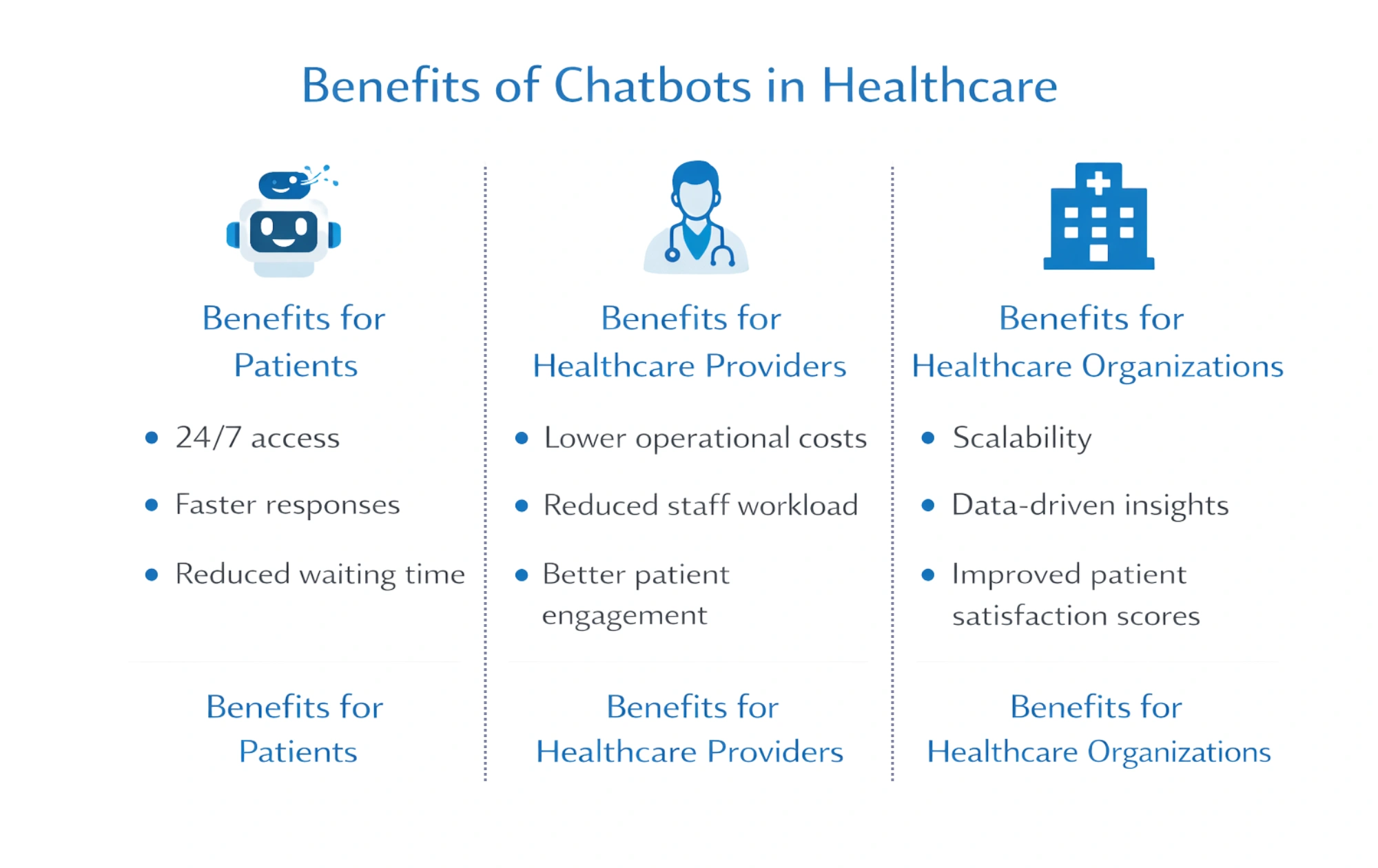
1. Benefits for Patients
For patients, chatbots remove many of the everyday barriers associated with accessing healthcare services. They provide:
- 24/7 access: Chatbots offer always-available healthcare support, allowing patients to ask questions, schedule appointments, or receive guidance at any time.
- Faster responses: Instant replies to routine queries help patients get answers without waiting for staff availability.
- Reduced waiting time: Automated interactions minimize queues and friction across digital touchpoints.
2. Benefits for Healthcare Providers
Healthcare professionals benefit from chatbots by offloading repetitive, non-clinical tasks and improving daily efficiency.
- Lower operational costs: Another key driver is the cost savings that hospitals gain by using chatbots to reduce dependency and improve efficiency.
- Reduced staff workload: Healthcare chatbot for clinics handles administrative tasks, allowing clinicians and staff to focus on patient care.
- Better patient engagement: AI chatbots in healthcare have also boosted engagement, with some systems achieving rates over 90%. Consistent communication improves follow-ups and continuity of care.
3. Benefits for Healthcare Organizations
At the organizational level, chatbots deliver strategic, long-term value by enabling scalable, data-driven operations.
- Scalability: Chatbot development for healthcare industry can support thousands of users simultaneously across departments without additional staffing.
- Data-driven insights: Conversation data provides actionable insights into patient needs and service gaps.
- Improved patient satisfaction scores: Faster service and better communication drive loyalty and retention.
Together, these benefits of chatbots in healthcare support clinician workflow optimization and improve overall care delivery efficiency.
Real-World Examples of Chatbots in Healthcare
Many organizations are already using AI-driven chatbots to improve patient access, triage, and engagement. These healthcare chatbot examples show how conversational AI is being applied in real-world healthcare settings. Below are the recommended chatbot platforms for healthcare.
-
Ada
Ada is a widely used AI-powered symptom assessment chatbot that helps users understand potential causes of symptoms and determine next steps in care using personalized health data.
-
Sensely
Sensely combines avatar-based interfaces with AI to support patient engagement, chronic disease management, and insurance-related interactions through a virtual nurse experience.
-
Google AMIE
A healthcare AI chatbot like Google AMIE demonstrates how an advanced AI chatbot for medical diagnosis can support medical reasoning, symptom assessment, and clinical-style conversations.
-
Healthily
Healthily’s chatbot, Dot, focuses on preventive care by offering health information, symptom checks, and lifestyle guidance to support everyday wellness decisions.
-
Buoy
Buoy uses AI to guide users through symptom analysis and connect them with appropriate care options, helping reduce unnecessary visits and improve care navigation.
How to Build a Healthcare Chatbot: Step-by-Step Process
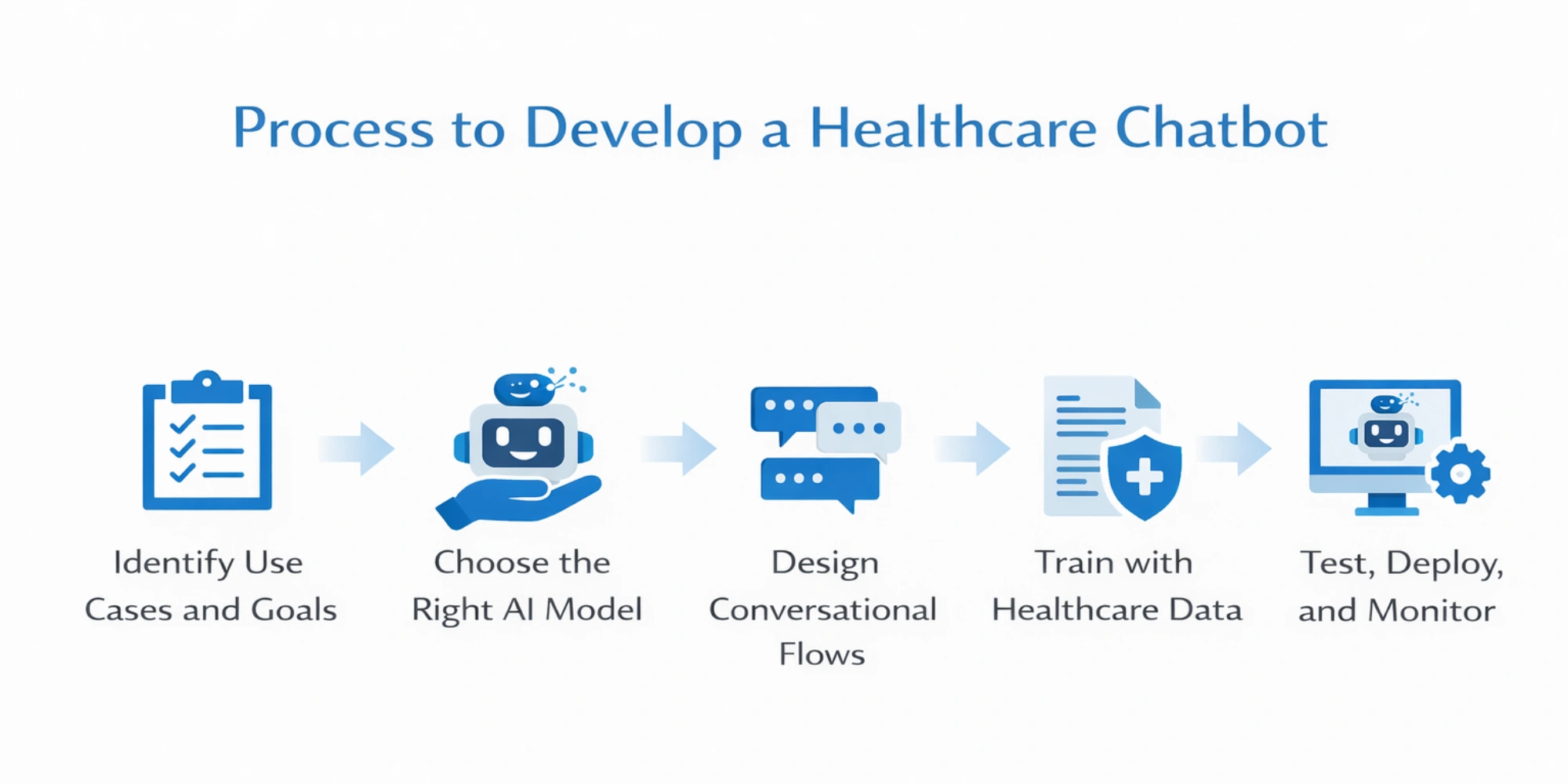
Successful healthcare chatbot development starts with a clear strategy and a structured execution plan. Building a chatbot for healthcare is not just about adding AI. It requires aligning technology with clinical workflows, patient needs, and compliance requirements. Below is a step-by-step approach for developing an AI-powered medical chatbot that delivers real value.
-
Identify Use Cases and Goals
The first step is to define what the chatbot should achieve. This could include appointment scheduling, symptom checking, medication reminders, or patient engagement. Clear goals help define functionality, success metrics, and ROI, keeping the healthcare-focused chatbot on high-impact use cases.
-
Choose the Right AI Model
Next, select the appropriate AI model based on complexity. Rule-based bots are well-suited to simple tasks, while AI-driven models using NLP and machine learning are better suited to dynamic conversations. The choice depends on scale, accuracy needs, and data availability.
-
Design Conversational Flows
Well-structured conversational flows ensure smooth and intuitive interactions. This step involves mapping user journeys, defining intents, handling fallbacks, and maintaining a tone that feels supportive and human.
-
Train with Healthcare Data
Training the chatbot with relevant healthcare data improves accuracy and relevance. This includes FAQs, clinical guidelines, and historical interactions. Data handling in custom medical software development must follow best practicesto ensure HIPAA compliance for AI chatbots.
-
Test, Deploy, and Monitor
Before launch, rigorous performance testing is essential to validate accuracy and security. Post-deployment, continuous monitoring and optimization are required as part of the chatbot development lifecycle to improve responses, handle new scenarios, and adapt to evolving healthcare needs.
Integrating Medical AI Chatbot with Existing Healthcare Systems
Effective healthcare chatbot integration determines how useful a chatbot is in real-world clinical environments. A chatbot that operates in isolation offers limited value. Let’s look at how AI chatbot integration with other healthcare systems improves productivity.
| Healthcare System | How Chatbots Integrate | Value Delivered |
| EHR & EMR Systems | Access patient records, allergies, and history | Personalized responses and continuity of care |
| CRM & Patient Portals | Sync patient profiles and communication history | Consistent engagement across touchpoints |
| Appointment Scheduling Systems | Read/write appointment availability | Real-time booking, rescheduling, and reminders |
| Telemedicine Platforms | Initiate virtual visits and pre-visit data collection | Faster consultations and better preparedness |
| Pharmacy Systems | Check prescriptions and refill status | Improved medication adherence |
| Billing & Insurance Systems | Retrieve coverage, claims, and payment status | Transparent financial communication |
| Wearables & IoT Devices | Collect vitals and activity data | Continuous monitoring and proactive care |
| Clinical Decision Support Systems (CDSS) | Share structured patient inputs | Enhanced clinical insights and recommendations |
When chatbots integrate across these systems, they become intelligent orchestration layers rather than simple communication tools. Such clinical system integration allows healthcare chatbots to guide patients, support clinicians, and automate administrative tasks without disrupting existing workflows.
Challenges in Using AI Chatbots in Healthcare and Their Solutions
While AI-driven chatbots are reshaping patient communication, several healthcare chatbot challenges must be addressed to ensure safe, compliant, and effective deployment.
Challenge 1: Data Privacy and Security Concerns
AI chatbots for healthcare handle highly sensitive patient information, making them attractive targets for data breaches and misuse.
Solution:
Implement end-to-end encryption, role-based access controls, and secure cloud environments. Building chatbots in line with HIPAA-compliant mobile app development standards ensures data protection and audit readiness.
Challenge 2: Accuracy and Bias Risks
AI chatbots for healthcare depend on training data that may be incomplete or biased, increasing the risk of inaccurate responses or unfair recommendations.
Solution:
Use diverse, high-quality datasets, perform regular model retraining, and continuously monitor chatbot performance.
Challenge 3: Regulatory Compliance
Healthcare regulations require strict controls around data handling, consent, and transparency, which can be complex to manage across systems.
Solution:
Embed compliance checks into chatbot workflows, maintain detailed audit logs, and align chatbot operations with healthcare compliance management.
Challenge 4: Maintaining Human Empathy
Chatbots in healthcare can feel impersonal during sensitive or emotional interactions, limiting patient comfort and trust.
Solution:
Incorporate sentiment analysis and define clear escalation paths to human professionals. This approach supports ethical AI in healthcare by balancing automation with care.
The Future of Chatbots in Healthcare
Advancements in AI are enabling chatbots to play a meaningful role in improving access, personalization, and efficiency across the care continuum. Let’s look at what the future holds for AI chatbot development in healthcare.
-
Generative AI-Powered Medical Chatbots
Generative AI development will enable chatbots to hold deeper, context-aware conversations with patients. These chatbots can explain medical information in simple language, assist with care navigation, and support clinicians by summarizing patient interactions and insights.
-
Voice-Based Healthcare Assistants
Voice technology in healthcare enables patients to book appointments, receive care instructions, and manage medications through hands-free interactions, improving accessibility for older adults and users with mobility limitations.
-
Predictive and Proactive Healthcare Support
As chatbots integrate with health data and analytics, they will shift from reactive responses to predictive support. By identifying risk patterns and recommending preventive actions, chatbots in healthcare will enable intelligent care delivery that improves outcomes.
Enterprise-Grade Healthcare Chatbot Development Backed by AI Expertise
SparxIT brings strong domain expertise and a results-driven approach to building intelligent chatbots for healthcare organizations. With hands-on experience across AI, compliance, and enterprise systems, we focus on delivering reliable, secure, and scalable solutions that align with real clinical and operational needs.
What we offer:
- End-to-end healthcare chatbot development services designed around patient engagement, care coordination, and operational efficiency.
- Proven expertise in enterprise healthcare chatbot development, supporting high user volumes, complex workflows, and multi-system environments.
- Strong foundation in security, privacy, and HIPAA compliant AI chatbot healthcare to protect sensitive data.
- Seamless chatbot integration as part of broader healthcare app development services, ensuring consistency across digital health platforms.
- Continuous optimization, performance monitoring, and enhancement to keep solutions aligned with evolving healthcare demands
By combining advanced AI development capabilities with deep healthcare domain knowledge, SparxIT acts as a trusted technology partner rather than just a vendor.

Partner with Experts
Frequently Asked Questions
What are chatbots in the medical field used for?


Chatbots in the medical field are used for appointment scheduling, symptom checking, medication reminders, patient education, billing support, and follow-ups. They automate routine interactions and improve access to timely healthcare information.
How do medical chatbots improve patient engagement?
Medical chatbots improve patient engagement by offering instant responses, personalized health guidance, and continuous communication. They keep patients informed before, during, and after care, encouraging active participation in their health journeys.
Are chatbots in the healthcare industry safe and accurate?
Chatbots in the healthcare sector are safe and accurate when designed with validated data, clinical oversight, and continuous monitoring. They are best suited for non-emergency support and decision assistance, not replacing medical professionals.
Are healthcare chatbots HIPAA compliant?
Healthcare chatbots can be HIPAA compliant if built with encryption, access controls, secure data storage, and proper consent management. Compliance depends on how the chatbot is designed, deployed, and maintained.
How much does it cost to develop a healthcare chatbot?
The cost to build a healthcare chatbot typically ranges from $15,000 to $100,000+, depending on complexity, AI capabilities, integrations with systems like EHR, and compliance requirements.
How long does it take to create a chatbot for healthcare?
Development timelines vary. A simple chatbot may take 6–10 weeks, while a fully integrated, intelligent healthcare chatbot typically requires 3–6 months or more to design, build, test, deploy, and securely optimize.