As the world is pivoting away from fossil fuels, the energy sector is scrambling to address pain points such as inefficient grid operations, policy uncertainties, insufficient investment, and fragmented monitoring systems.
Apart from the above, we’ve installed the panels and turbines, but without a digital brain to coordinate them. Therefore, there is a dire need for green tech innovation. This is where renewable energy software development comes as the backbone of modern infrastructure.
Software for renewable energy is no longer a “nice to have.” It has become necessary to stitch hardware and data into seamless and scalable systems. In fact, according to the International Energy Agency (IEA), global renewable power capacity is set to grow by 2.5 times by 2030, making digital transformation across solar, wind, and hydro non-negotiable.
Clean energy software solutions and decarbonization analytics are helping teams monitor performance, reduce carbon emissions, and make data-driven decisions. Moreover, energy software development is reshaping how energy assets are planned, managed, and optimized.
In this guide, we will walk you through industry trends, real-world applications, key features, development steps, challenges, costs, and why renewable energy software matters.
Why Renewable Energy Software Development is Exploding in 2026?
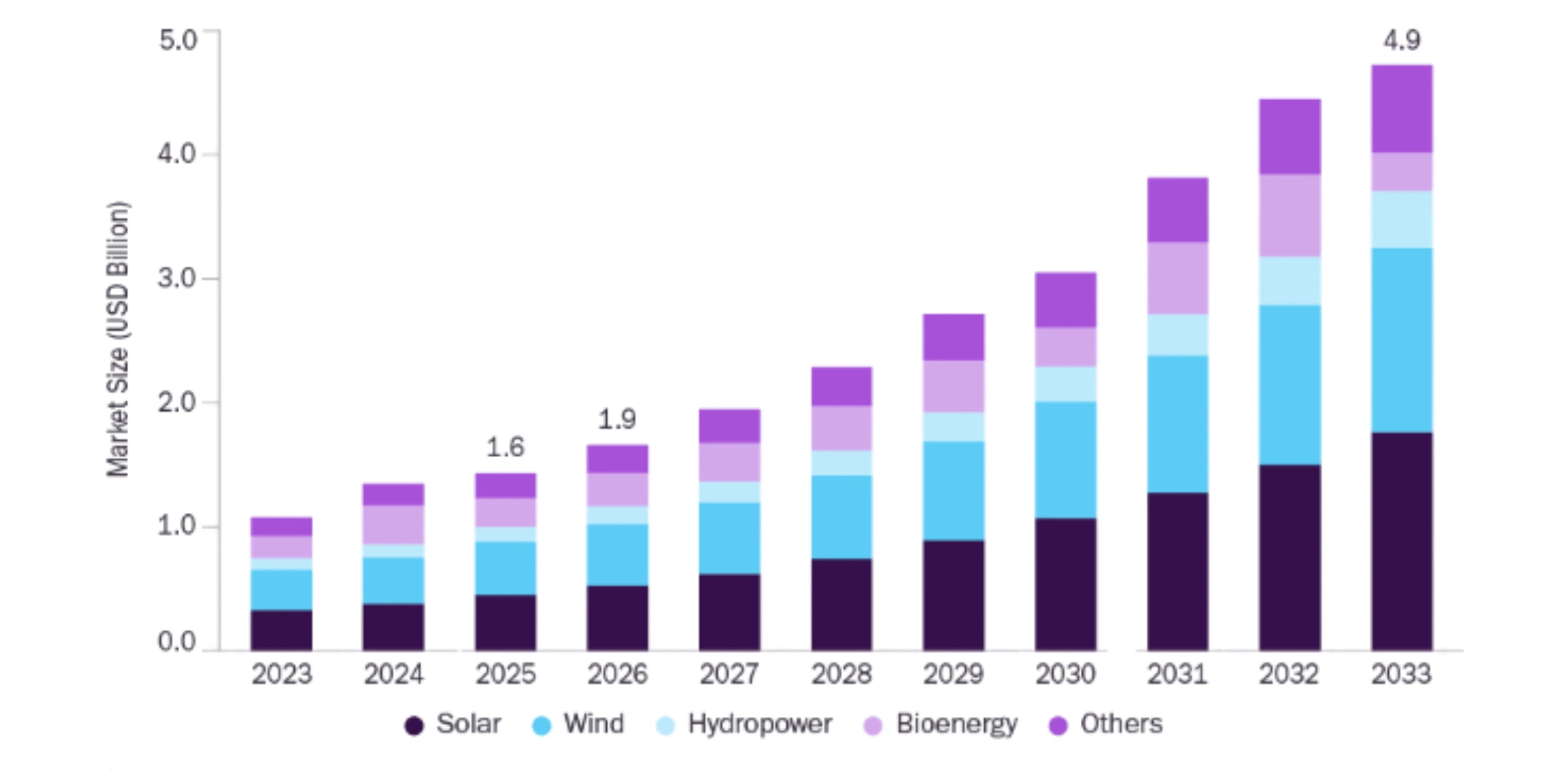
The clean energy industry is maturing rapidly. According to Grand View Research, the global renewable energy market size was worth about USD 1.6 billion in 2025. It is expected to grow to around USD 4.9 billion by 2033, with a CAGR of 14.7% from 2026 to 2033.
Digital energy solutions and Custom Energy Management Systems (EMS) are helping energy developers, utilities, and EPC (Engineering, Procurement, and Construction) companies operate more efficiently by reducing waste, improving forecasting, and lowering production costs.
What Is Fueling This Acceleration?
- Real-time insights from AI-powered energy analytics are helping operators automate decision-making and perform predictive maintenance.
- Advanced renewable energy monitoring provides continuous oversight of plant performance, downtime risks, and environmental factors.
- Automation features optimize energy output, reduce manual intervention, and enhance the sector’s digital transformation strategy.
- Smart grid technology stabilizes fluctuating energy demand, balances loads, and improves system-wide grid resilience.
- Net Zero compliance software supports carbon reporting, emission tracking, and sustainability requirements for global markets.
Real-World Applications of Renewable Energy Software
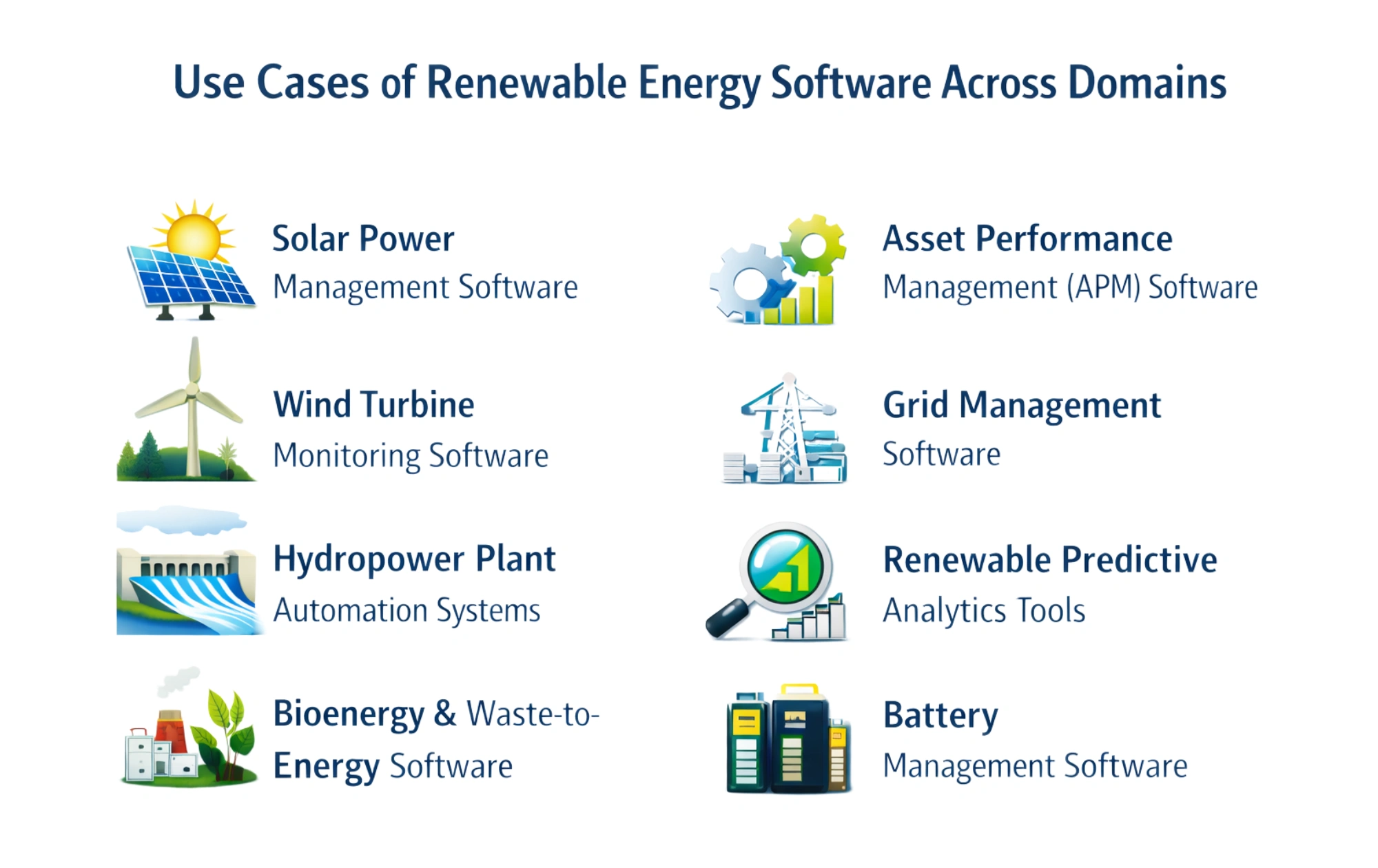
Companies across solar, wind, hydro, and emerging clean tech ecosystems now rely on digital tools to improve forecasting, automate decisions, and maximize asset output. Let’s look at the types of renewable energy software solutions and their use cases in detail below:
-
Solar Power Management Software
Solar energy software helps to manage panel performance, sun exposure, and inverter efficiency. These tools track sunlight variability, detect shading losses, and send real-time alerts about faults. Predictive analytics also help forecast production on cloudy days and adjust energy distribution accordingly.
Key capabilities of solar monitoring software:
- Real-time panel and inverter monitoring
- Automated performance benchmarking
- Heat map analysis for underperforming zones
Example:
Fronius Solar.web provides live monitoring, performance tracking, and electricity consumption forecasting for solar plants worldwide.
-
Wind Turbine Monitoring Software
Wind energy software detects anomalies and optimizes turbine output. IoT sensors capture vibration patterns, temperature changes, and blade stress levels. Operators receive alerts for bearing issues or misalignment long before failures occur.
Key capabilities of the wind farm management tool:
- IoT-driven vibration analysis
- High-wind scenario forecasting
- Automated shutdown and restart controls
Example:
Siemens Gamesa SCADA (Supervisory Control and Data Acquisition) enables turbine-level vibration monitoring, material consumption, and predictive maintenance.
-
Hydropower Plant Automation Systems
Hydro energy management systems automate water flow control, turbine adjustments, and gate operations. These systems optimize reservoir levels and ensure safe power generation during seasonal shifts. In addition, AI-driven dashboards support compliance reporting and environmental monitoring.
Key capabilities of Hydropower software:
- Water inflow and outflow analytics
- Automated turbine speed optimization
- Real-time dam safety monitoring
Example:
GE Hydro Digital Solutions supports hydropower automation, predictive analytics, and compliance workflows.
-
Bioenergy & Waste-to-Energy Software
Bioenergy plants need software to analyze feedstock quality, track combustion metrics, and forecast thermal output. Modern platforms integrate energy analytics software to improve material throughput and ensure safe, consistent power generation from waste streams.
Key capabilities of Bioenergy software
- Feedstock tracking and quality scoring
- Emission and combustion data visualization
- Automated thermal efficiency controls
Example:
Veolia Bioenergy optimizes waste-fuel use, combustion cycles, and plant emissions. They generate renewable energy from biomass.
-
Asset Performance Management (APM) Software
Utilities and developers use Asset Performance Management (APM) software to monitor asset health, reduce downtime, and improve lifecycle performance. APM systems compile data from sensors, SCADA systems, and weather models to flag early warning signs of equipment failures.
Key capabilities of APM software:
- Predictive maintenance alerts
- Lifecycle performance scoring
- Fault diagnostics and root-cause analysis
Example:
IBM Maximo APM is widely used for renewable asset maintenance, AI-driven alerts, and equipment lifecycle optimization.
-
Grid Management Software
Grid Management systems help to balance load, manage outages, and integrate Distributed Energy Resources (DERs). These systems use grid optimization models to forecast demand and route power efficiently. They also support smart grid technology by enabling automated switching and voltage regulation.
Key capabilities of Grid management software:
- Smart grid load predictions
- Voltage, frequency, and outage management
- DER integration and balancing
Example:
Schneider Electric EcoStruxure Grid powers real-time grid analytics, automation, and DER coordination.
-
Renewable Predictive Analytics Tools
Forecasting tools combine weather models with AI-powered energy analytics to predict solar and wind output. These solutions support renewable energy monitoring systems, enabling energy developers to plan ahead and manage fluctuations.
Key capabilities of these tools:
- Advanced energy forecasting
- Real-time production insights
- Automated risk scoring for weather variability
Example:
Tomorrow.io Energy Platform provides hyper-accurate renewable forecasting for solar and wind plants.
-
Battery Management Software
Energy storage facilities use Energy Storage System (ESS) Management Software to track charge cycles, prevent battery degradation, and balance energy flows. These platforms support EV charging management software, peak shaving, and power distribution from renewable sources.
Key capabilities of BMS software:
- Battery storage optimization models
- Real-time charge and discharge control
- Grid-level energy flow balancing
Example:
Fluence Mosaic manages ESS operations, optimizes charge cycles, and supports VPP-level battery orchestration.
Benefits of Renewable Energy Software Solutions for Businesses & Utilities
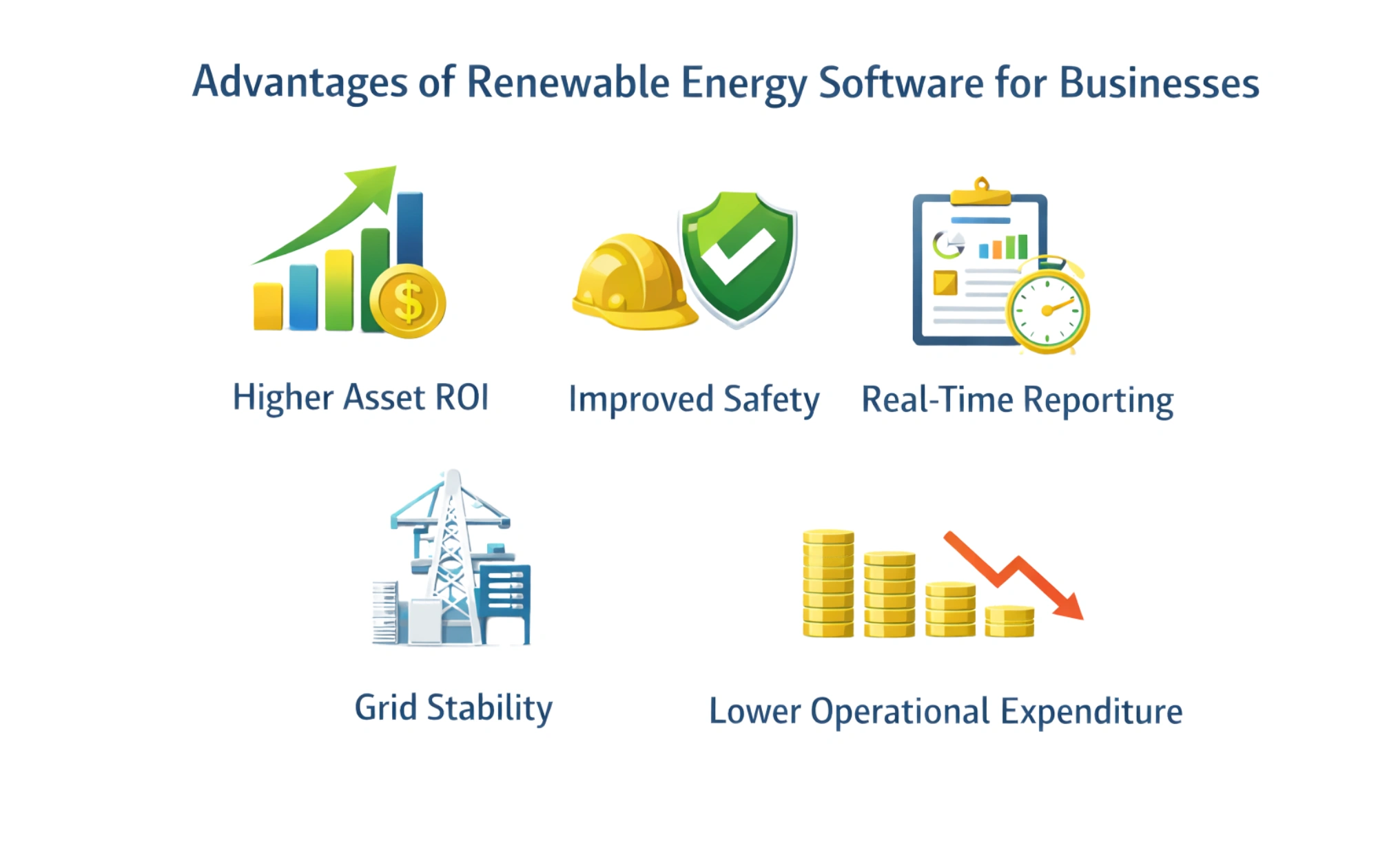
Renewable energy operations are becoming more complex, and companies need smarter tools to stay efficient and competitive. This is where modern energy sector software development makes a measurable difference. Let’s look at the advantages below:
-
Higher Asset ROI
Software-driven insights help operators perform predictive maintenance rather than react to failures. This extends equipment life and improves asset ROI for developers and utilities.
-
Improved Safety
Automation tools optimize operations, monitor working conditions, and reduce human error. These software solutions for energy industry ensure safer environments by flagging faults and risky patterns before they escalate.
-
Real-Time Reporting
Modern emission tracking software makes compliance hassle-free. Real-time dashboards, automated reports, and environmental analytics help organizations meet national and global sustainability standards without manual effort.
-
Grid Stability
Advanced energy management software platforms enhance grid stability by optimizing load balancing and resolving fluctuations. This leads to higher operational performance and fewer unexpected outages.
-
Lower Operational Expenditure
With precise forecasting, automated controls, and reduced manual intervention, businesses benefit from long-term cost optimization. Energy waste drops, efficiency increases, and operational expenditure becomes more predictable.
Key Features Required for Software Development in Renewable Energy
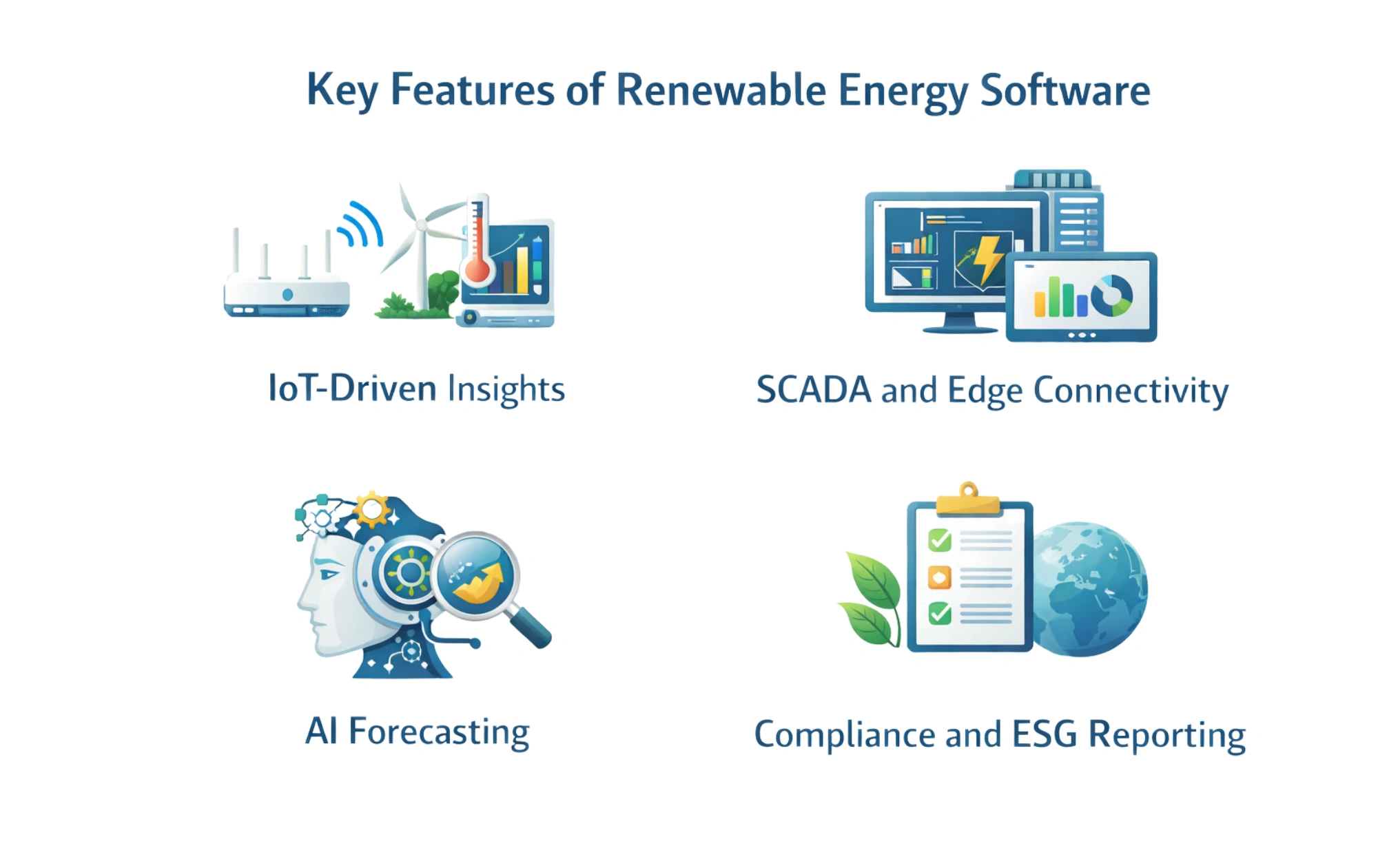
Modern renewable energy platforms must handle massive data streams, integrate with smart hardware, and support real-time decision-making. This is why developers rely on advanced IoT energy solutions, intelligent SCADA systems, and scalable cloud energy software to ensure accurate control, monitoring, and automation. Let’s look at the must-have features:
-
IoT-Driven Insights
Custom energy software development offers real-time monitoring dashboards powered by energy IoT integrations. Sensors track performance, grid behavior, and equipment conditions. With smart meters analytics, teams can measure consumption patterns, detect anomalies, and optimize load distribution across sites.
-
SCADA and Edge Connectivity
Next-gen systems integrate tightly with SCADA systems, field sensors, and edge devices. They collect data from inverters, turbines, storage units, and grid components. This allows operators to automate controls, streamline processes, and manage assets remotely with high accuracy.
-
AI Forecasting
AI-driven forecasting relies on forecasting models, data visualization, and energy data analytics to predict generation patterns. Furthermore, AI in climate change helps in improving operational decision-making. Companies can detect faults early, reduce downtime, and extend the lifespan of their assets.
-
Compliance and ESG Reporting
Sustainability is a major priority, which is why modern platforms include software for emissions tracking and ESG reporting tools. These help companies maintain compliance while meeting global climate benchmarks.
Technology Stack for Renewable Energy Software Development (220–260 words)
A powerful energy software tech stack is the backbone of any modern renewable platform. Therefore, you need to accommodate machine learning in renewable energy models, edge systems, and big data pipelines to ensure accuracy and performance. Here’s a closer look at the tech stack required to make renewable energy software.
| Category | Technologies Used | Purpose |
| Programming Languages | Python, Java, Node.js | Logic building, APIs, ML workflows |
| Frontend Frameworks | React, Angular, Vue | Dashboards, monitoring interfaces |
| Cloud Platforms | AWS, Azure, Google Cloud | Cloud computing for energy, scalability, and remote access |
| Databases | PostgreSQL, MongoDB, InfluxDB | Handling big data energy systems and telemetry |
| IoT & Edge Platforms | ThingsBoard, AWS IoT Core | Edge Computing for Renewables, device connectivity |
| Machine Learning Tools | TensorFlow, PyTorch | Forecasting, predictive analytics, and machine learning models |
| SCADA & Control Systems | Ignition, Wonderware | Automation, supervisory control |
| Data Streaming Tools | Kafka, MQTT | Managing Real-time Telemetry Data and event streams |
| GIS & Mapping | ArcGIS, Mapbox | Geospatial planning, asset tracking |
A well-chosen AI tech stack ensures that software for energy management is scalable, secure, and optimized for continuous data flows.
How to Build Renewable Energy Software: Step-By-Step Process
Creating renewable energy platforms requires a structured and strategic software product development process. The goal is to build systems that can handle real-time data, automation workflows, and long-term operational needs. Here’s how the renewable energy software development process works in detail.
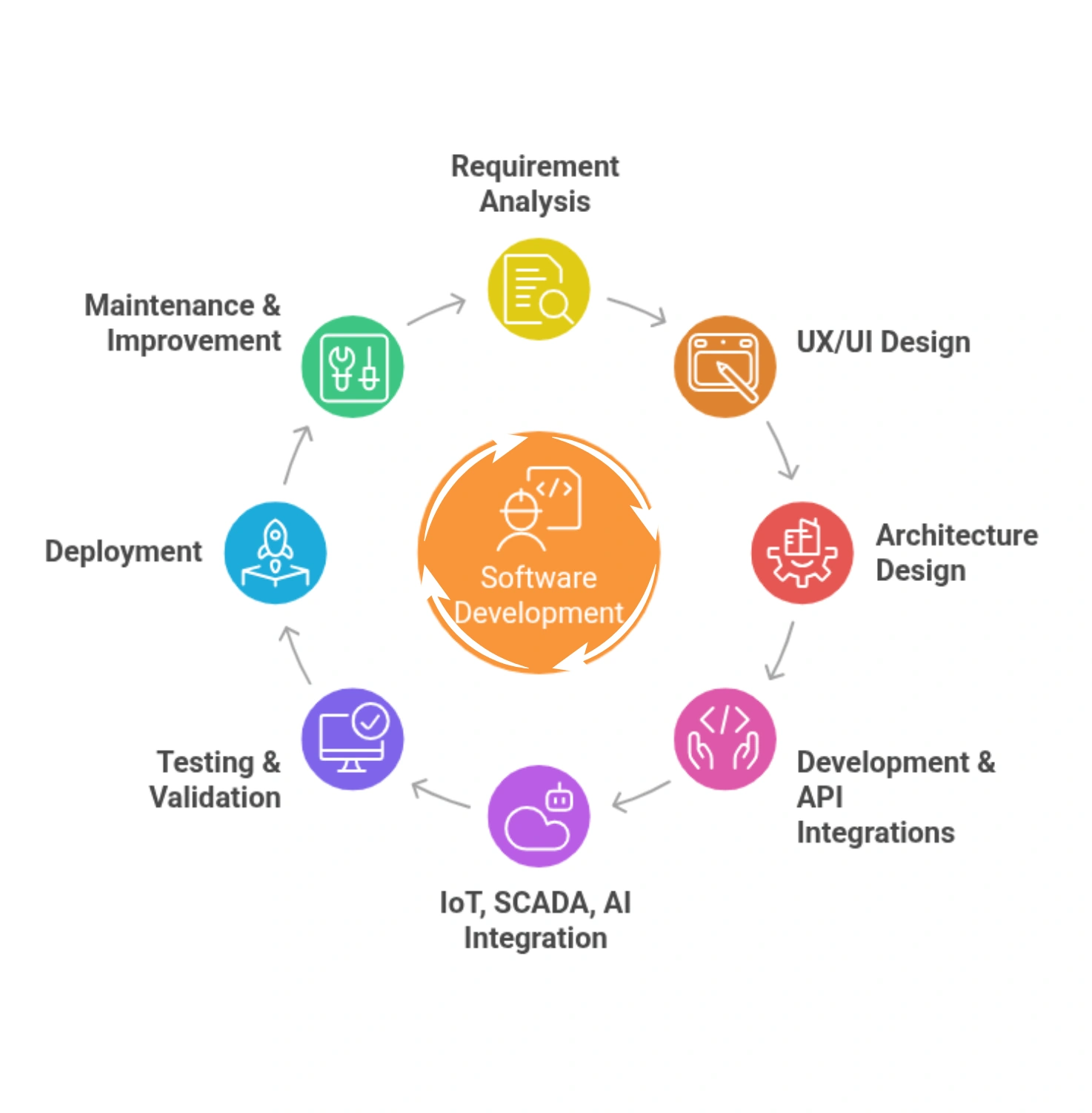
1. Requirement Analysis
This stage involves deep discussions with stakeholders, including energy developers, utilities, EPC teams, and regulatory experts. Product discovery and strategy, technical requirements, compliance rules, hardware specifications, and integration needs are documented. The goal is to map how the system will support monitoring, forecasting, safety, and reporting.
2. UX/UI Design
Designers create intuitive dashboards for energy operators to visualize real-time performance, analytics, and alerts. This includes interactive charts, plant heatmaps, grid flow displays, and forecasting screens. An intuitive UX/UI design ensures quick decision-making during high-load scenarios and critical operations.
3. Architecture Design
Engineering teams choose between cloud, on-premise, and hybrid models. Cloud computing services for the energy industry provide elasticity, distributed access, automated backups, and cost efficiency. The architecture defines data pipelines, security parameters, device connectivity, and future integration capabilities.
4. Development and API Integrations
Frontend and backend development begin with scalable coding practices. The system must support smooth API integrations with energy meters, IoT sensors, EMS platforms, and reporting engines. In this phase, secure data handling and modular development are prioritized.
5. Integrating IoT, SCADA, and AI Models
This step connects hardware with software. An IoT development company integrates with sensor data that supplies field data, SCADA systems handle control logic, and AI models enable predictive forecasting. Together, they power automation, anomaly detection, and performance optimization.
6. Testing and Validation
The renewable energy software undergoes extensive testing, including performance stress tests, penetration testing, load balancing, and on-site field validation. This ensures the platform operates reliably in real-world conditions.
7. Deployment
The platform is deployed to live environments, configured for operational workflows, and handed over with training sessions and documentation to ensure smooth adoption.
8. Ongoing Maintenance and Improvement
Continuous app updates, feature enhancements, compliance patches, and performance tuning keep the software aligned with industry needs and ready for future innovations.
What is the Cost to Develop a Renewable Energy Software Solution?
The app development cost for renewable energy platforms varies widely depending on system size, performance requirements, and automation levels. Companies must consider multiple variables when budgeting energy projects. Below is a breakdown of the core components that influence overall pricing.
Key Cost Factors for Renewable Energy Software
| Cost Factor | Description | Impact on Pricing |
| System Complexity | Number of modules, dashboards, and workflows | Higher complexity increases development hours |
| Integrations | IoT, SCADA, EMS, grid, and API layers | Technical depth raises cost |
| AI/ML Models | Predictive analytics and forecasting engines | Adds cost due to training and big data needs |
| Cloud Infrastructure | Hosting, compute, storage, telemetry | Monthly fees affect long-term budget |
| Security & Compliance | Pen testing, encryption, ESG rules | Increases total development effort |
| Maintenance | Updates, patches, performance tuning | Recurring post-launch cost |
Understanding these factors helps companies estimate custom software development pricing more accurately. Different project scales require different levels of investment. The table below outlines the typical budget ranges.
Estimated Development Cost Based on Project Scale
| Project Type | What It Includes | Estimated Cost |
| MVP Version | Basic dashboards, simple monitoring, limited integration | $25,000–$40,000 |
| Mid-Level Platform | IoT data flows, automation, SCADA-light, analytics | $40,000–$80,000 |
| Enterprise Solution | Full SCADA, AI stack, digital twins, grid tools | $180,000–$300,000+ |
Challenges in Renewable Energy Software Development and Their Solutions
Developing renewable energy software involves much more than writing code. The sector deals with complex challenges. Below are the most common obstacles organizations face and the practical solutions that help overcome them.
Challenge 1: Integrating New Software with Old SCADA Systems
Many utilities still rely on aging SCADA systems that were never designed for cloud migration services, IoT sensors, or AI tools. These outdated systems lack interoperability, creating communication gaps and limiting automation.
Solution:
A phased legacy system modernization approach works best. Middleware connectors, standard protocols like MQTT and OPC-UA, and API layers help bridge old and new systems.
Challenge 2: Data Overload and Lack of Standardization
Renewable plants generate huge volumes of telemetry data from sensors, inverters, turbines, and grid equipment. Without standard formats, teams face frequent data conflicts and slow analytics.
Solution:
Adopting unified data schemas, cloud data lakes, and AI integration services for filtering prevents bottlenecks.
Challenge 3: Cybersecurity Risks in Energy Infrastructure
As grids become digitally connected, the attack surface expands. Cybercriminals target weak endpoints, unpatched devices, and insecure communication channels across renewable networks.
Solution:
Implement layered cybersecurity solutions for the energy sector using advanced encryption, MFA, and zero-trust frameworks to ensure long-term resilience.
Challenge 4: Hardware–Software Compatibility Issues
Different plants rely on components from various manufacturers. This often leads to interface mismatches, unreliable readings, and integration challenges during deployment.
Solution:
Modular architecture with device-agnostic APIs, hardware-emulation testing, and standardized communication protocols ensures seamless compatibility across all assets.
Challenge 5: Compliance Barriers
Regulations around safety, emissions, and compliance in the energy sector can increase development costs. Utilities also struggle with rising expenses tied to automation, grid communication, and intermittent management.
Solution:
Using enterprise cloud infrastructure, phased rollouts, and open-source technologies lowers initial costs. Automated reporting tools simplify compliance and fix grid instability.
Future Trends in Renewable Energy Management Software
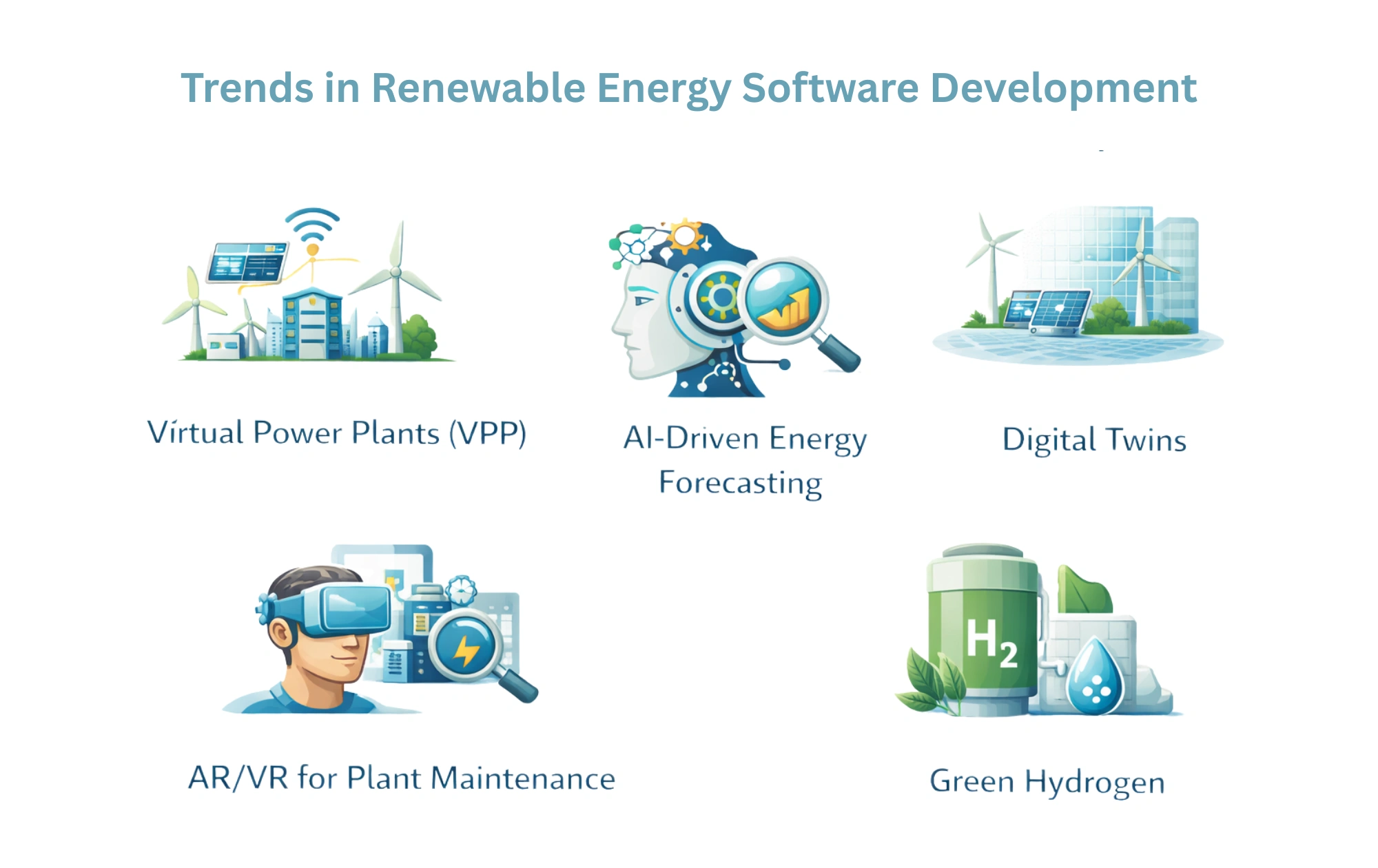
The future of energy is shifting from centralized control to intelligent, decentralized ecosystems. Below are the most impactful trends shaping next-generation energy management software development.
-
Virtual Power Plants (VPP)
VPPs digitally connect solar farms, wind turbines, batteries, and flexible loads into one unified network. Through real-time automation, VPP platforms use predictive analytics to adjust power flows instantly, support peak demand, and maintain supply when traditional grids falter.
-
AI-Driven Energy Forecasting
Forecasting engines powered by AI in renewable energy deliver highly accurate predictions for solar irradiance, wind speeds, storage behavior, and grid response. These insights help operators optimize dispatch schedules, reduce curtailment, and plan market participation more intelligently.
-
Digital Twins
A digital twin for renewable energy is a virtual replica of a power plant, turbine, panel line, or grid segment. These replicas simulate real-world conditions to test scenarios, predict equipment failures, and optimize asset performance without interrupting operations.
-
AR/VR for Plant Maintenance
AR and VR tools are revolutionizing field operations. Technicians can view asset diagnostics, 3D models, and maintenance instructions through headsets or mobile overlays. This reduces downtime, prevents errors, and allows specialists to guide teams remotely.
-
Green Hydrogen
Hydrogen energy management software controls electrolyzer output, monitors purity levels, optimizes storage, and forecasts usage across industrial applications. Smart hydrogen platforms will play a key role in integrating hydrogen into renewable energy ecosystems.
Why SparxIT Is a Trusted Partner in Renewable Energy Software Development
SparxIT has earned its reputation as a reliable innovation partner by helping energy companies build scalable, intelligent, and future-ready platforms. With deep experience in enterprise app development, the team understands the unique challenges of grid stability, asset monitoring, and clean-energy optimization.
Our renewable energy software integration solutions are designed to support utilities, developers, and EPC companies with high-performance architecture and long-term operational value.
What Makes SparxIT Stand Out:
- Proven expertise in building IoT, SCADA, and AI-driven energy systems
- Strong track record in developing enterprise-grade platforms
- End-to-end development from discovery to deployment
- Robust security, compliance, and automation testing frameworks
- Scalable architectures that support renewable growth
When digital transformation companies partner with SparxIT, they gain a team that delivers reliable technology, transparent communication, and solutions built for the future of clean energy through advanced renewable energy software development.

Partner with Experts
Frequently Asked Questions
How does renewable energy software work?


It collects real-time data from energy assets, analyzes performance, automates controls, forecasts production, and manages grid interactions to improve efficiency, stability, and decision-making across renewable energy operations.
How does AI in renewable energy enhance business operations?
AI improves forecasting accuracy, predicts equipment failures, optimizes asset performance, automates decision-making, and reduces operational costs, helping energy companies maximize output and achieve higher reliability across their renewable portfolios.
What is the role of blockchain in renewable energy software solutions?
Blockchain enables secure, transparent energy transactions, supports peer-to-peer trading, verifies carbon credits, prevents tampering with data, and ensures trustworthy tracking of generation, consumption, and compliance across decentralized renewable energy networks.
How much does custom energy management software development cost?
Custom energy software typically costs $25,000 to $300,000, depending on factors such as complexity, integrations, AI models, SCADA requirements, cloud infrastructure, security needs, and long-term maintenance. Businesses working with a custom AI development firm can align these capabilities with enterprise requirements.
How long does it take to develop custom energy software solutions?
Development timelines range from 3 to 12 months. It relies on features, integrations, AI capabilities, compliance needs, testing cycles, and project scale for utilities, developers, or enterprise energy companies.
What are the security standards for renewable energy software development?
Security standards include encryption, multi-factor authentication, penetration testing, secure APIs, zero-trust architecture, SCADA hardening, and compliance with NIST, ISO 27001, and energy-sector cybersecurity regulations to protect critical infrastructure.